How to Price Med Spa Services for 20–30% Net Profit (2026 Cost Formula)
Build a price from your own cost stack. The formula covers direct cost, overhead, and a 20–30% net profit target, with worked Botox, filler, and laser examples.
What this helps diagnose:Your prices match competitors, but you do not know if they cover your costs.
Most med spa owners set prices by looking at what the clinic down the street charges. That is the fastest way to erode your margin. Your competitor's cost structure is not your cost structure. Their rent might be half of yours. Their providers might be on a different pay plan. Their product waste might be lower because they have stricter protocols. When you copy their prices, you are not copying their profit. You are importing their math into your business, and the numbers rarely line up.
Table of Contents
- The #1 Pricing Mistake That Kills Med Spa Profitability
- The 4-Layer Cost Stack: What Your Price Must Cover
- The Target Margin Math: How to Calculate Your Final Price
- Worked Example 1: Botox (High Volume, Low Time)
- Worked Example 2: Lip Filler (High Cost, High Perceived Value)
- Worked Example 3: Laser Hair Removal (Equipment Heavy)
- The 3 Most Common Underpricing Mistakes (And How to Fix Them)
- How to Adjust Prices for Your Local Market (Without Losing Margin)
- Setting Prices for 2026: Trends That Affect Your Margin
- When to Raise Prices (Without Losing Clients)
- Your Next Step: Stop Guessing, Start Measuring
- Frequently Asked Questions About Med Spa Pricing
This guide is a finance-first framework for US med spa owners who want to calculate prices instead of guessing at them. By the end, you will know how to build your cost per service, cover your overhead, and price toward a 20 to 30 percent net profit target. The focus is on high-volume, non-surgical services: injectables, lasers, facials, and body contouring. Surgical procedures are excluded because they carry different cost structures, regulatory requirements, and risk profiles.
The shift is simple: treat every service like a product with measurable inputs and a required return. That is what we will do here.
The #1 Pricing Mistake That Kills Med Spa Profitability
The most common pricing method in med spas is market-rate pricing. An owner opens a clinic, pulls menus from three nearby competitors, and sets prices somewhere in the middle. The logic feels safe. If everyone else charges $12 per unit of Botox, $12 must be sustainable. If the clinic across town charges $600 for a laser package, $600 must be the right number.
Market-rate pricing ignores your overhead. Rent in your zip code, your provider's pay, your product waste, your equipment lease terms: none of these appear on a competitor's menu. You can see their price. You cannot see their cost stack. And price alone tells you nothing about profitability.
The result is predictable. You can lose money on a popular treatment while believing you are doing fine. A service that looks busy on the schedule can still drain cash if its margin was never calculated. Owners often find this out only when they build a full cost stack and see that their highest-volume service has been running at a low single-digit net margin for years.
The fix requires discipline more than sophistication. You cannot set a price until you know your unit economics: the cost to deliver one unit of service, whether that is one Botox session, one filler syringe, or one laser treatment. Once you know that number and your overhead rate, you can apply a margin target and arrive at a price designed to protect profit.
The 4-Layer Cost Stack: What Your Price Must Cover
Every service has a cost stack: four layers that sit beneath the price. If your price does not clear all four layers with room to spare, that service is not producing a profit.
Layer 1: Cost of Goods Sold (COGS)
COGS is the product cost per service. For Botox, it is the cost per unit from the vial. For filler, it is the syringe. For a facial, it is the serum, mask, and peel used during the treatment. For laser hair removal, it is the disposable tip and any conductive gel.
Include measured product loss in the cost stack. Reconcile purchases, usable inventory, administered units, and discarded product. Until records are available, test clearly labeled sensitivity assumptions rather than treating a generic waste rate as normal.
Layer 2: Provider Time
Every minute a provider spends with a client has a cost. Calculate the fully loaded hourly rate: base wage plus payroll taxes, benefits, and any commission. If your injector earns $65 per hour in base pay, plus commission, plus benefits that add 15 percent to base, the fully loaded rate might be $80 to $100 per hour.
Convert that to a per-minute cost. At $80 per hour, one minute costs $1.33. A 15-minute Botox appointment costs $20 in provider time. A 30-minute filler appointment costs $40. A 60-minute facial costs $80.
Skip this layer and you are pricing as if your provider's time were free. It is often the second-largest cost in the stack.
Layer 3: Direct Overhead
Direct overhead covers everything consumed during the service that is not the primary product: gloves, gauze, alcohol wipes, numbing cream, cotton pads, laundry for treatment room linens. These items are small individually and add up across hundreds of services a month.
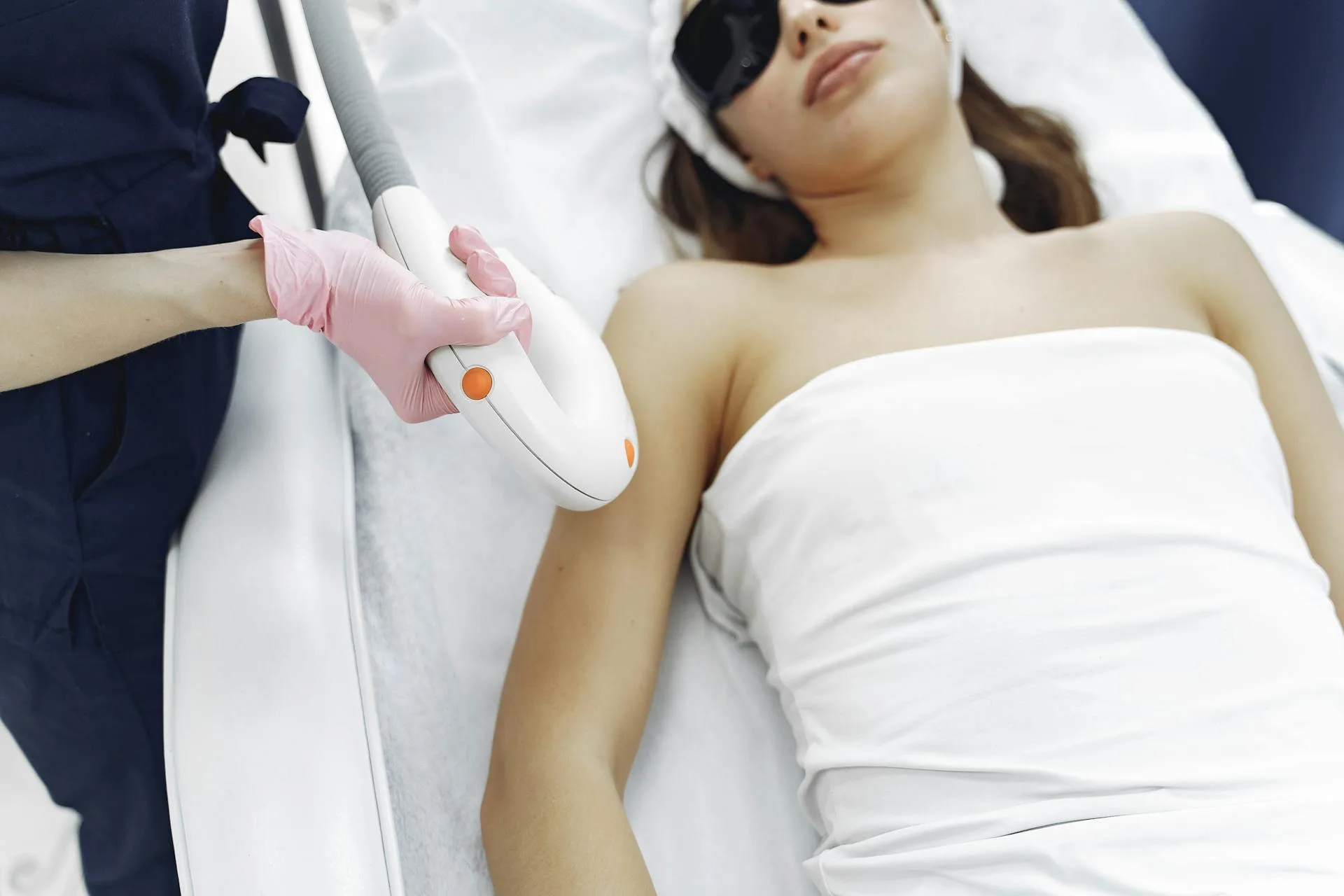
This layer also includes equipment. If you lease a laser for $3,000 a month and perform 40 sessions a month on it, each session carries $75 of equipment cost. If you own the laser, spread the purchase price over its useful life and divide by expected sessions. The goal is a per-session cost that reflects what the equipment actually costs you.
Room turnover belongs here too. If a medical assistant spends 10 minutes resetting the room between clients and earns $25 per hour fully loaded, that is $4.17 per service.
Layer 4: Indirect Overhead
Indirect overhead is everything that keeps the business running but is not tied to a specific treatment: rent, utilities, front desk salaries, marketing, EMR software, malpractice insurance, card processing fees, and general administrative costs.
The simplest method is to express indirect overhead as a percentage of service revenue. If your indirect overhead is $30,000 a month and you project $100,000 in monthly service revenue, your overhead rate is 30 percent. Thirty cents of every dollar you charge goes to overhead before you see any profit. Use your own P&L to set this number. It varies widely with rent, staffing, and how much you spend on marketing.
This layer is where market-rate pricing fails most. A practice paying $15,000 a month in rent has a very different overhead rate than one paying $3,000. If both charge the same price, one earns far more than the other. Your price has to reflect your costs, not theirs.
The Target Margin Math: How to Calculate Your Final Price
Once you know the direct cost of a service (layers 1 through 3) and your overhead rate (layer 4), the formula is:
Price = Direct Cost ÷ (1 − Overhead % − Target Net Margin %)
Overhead and profit both have to come out of the price, so both belong in the denominator. If a service has $150 of direct cost, your overhead rate is 30 percent, and you want a 20 percent net margin, the calculation is $150 ÷ (1 − 0.30 − 0.20) = $150 ÷ 0.50 = $300. Check it: $300 of revenue covers $150 of direct cost, $90 of overhead (30 percent), and leaves $60 of profit (20 percent). For a 30 percent net margin, divide by 0.40 instead: $375.
A common shortcut divides direct cost by (1 − target margin) and forgets overhead. Here, that gives $150 ÷ 0.70 = $214. At $214, overhead takes $64, direct cost takes $150, and profit is zero. The shortcut does not produce a 30 percent margin. It produces a break-even price.
The math works backward from the outcome you want. Instead of setting a price and hoping a margin appears, you set the margin and let the price follow.
Keep product-only gross margin and net margin separate. The first deducts product cost; the second also reflects labor, overhead, and other costs. Derive the price from the full cost stack and your chosen objective. Worked targets in this article are illustrative inputs, not recommended ranges for every practice.
This framework also shows which services actually earn money. A service with high revenue and a low margin can contribute less than a smaller service with an excellent one.
Worked Example 1: Botox (High Volume, Low Time)
Botox is a large share of revenue in many med spas. It is high volume, low time, and brings clients back every three to four months. Here is how the cost stack and formula work for one treatment.
Illustrative example
Assumptions: a 100-unit vial costs $600. The treatment uses 40 units. Waste is 10 percent. The injector costs $80 per hour fully loaded, and the appointment takes 15 minutes. Overhead runs 30 percent of revenue.
Direct cost: COGS is 40 units at $6 per unit, or $240, plus $24 of waste, for $264. Provider time is 15 minutes at $1.33 per minute, or $20. Supplies and room turnover are $15. Total direct cost is $299.
Price at a 20 percent net margin: $299 ÷ (1 − 0.30 − 0.20) = $299 ÷ 0.50 = $598, or about $14.95 per unit.
Price at a 30 percent net margin: $299 ÷ 0.40 = $747.50, or about $18.69 per unit.
Checking common price points (overhead held at 30 percent of the price):
- $12 per unit ($480): $480 − $299 − $144 = $37 profit, about 8 percent.
- $14 per unit ($560): $560 − $299 − $168 = $93 profit, about 17 percent.
- $16 per unit ($640): $640 − $299 − $192 = $149 profit, about 23 percent.
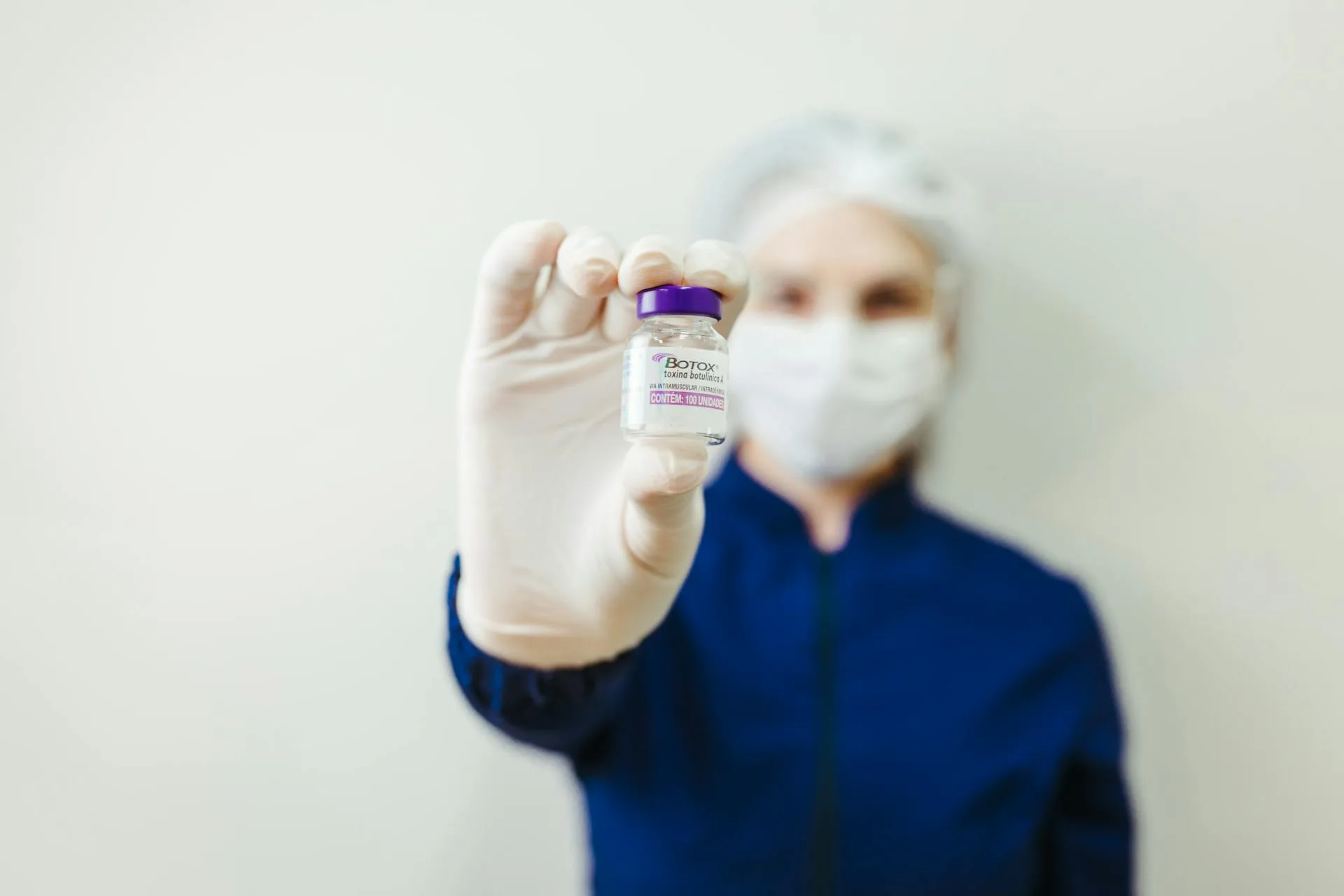
The takeaway is not that you must charge $15 or $19 a unit. It is that you must know your number. Neurotoxin carries a high product-only margin, but once provider time and overhead are included, the fully loaded margin at common price points is thin. If your market will only bear $14, you need to lower cost somewhere: better purchasing terms, less waste, shorter appointments, or lower overhead. For the neurotoxin-specific version of this math, including what to charge per unit and how to set a minimum treatment fee, see our Botox pricing guide.
Worked Example 2: Lip Filler (High Cost, High Perceived Value)
Lip filler is a high-ticket service with strong perceived value. Clients will pay a premium for a skilled injector. But filler also carries high COGS, which squeezes margin if you are not careful.
Illustrative example
Assumptions: one syringe of hyaluronic acid filler costs $400. The treatment uses one full syringe. Waste is 10 percent. The injector costs $100 per hour fully loaded, and the appointment takes 30 minutes including consultation and numbing. Overhead runs 30 percent of revenue.
Direct cost: COGS is $400 plus $40 of waste, or $440. Provider time is 30 minutes at $1.67 per minute, or $50. Supplies and room are $20. Total direct cost is $510.
Price at a 20 percent net margin: $510 ÷ 0.50 = $1,020.
Price at a 30 percent net margin: $510 ÷ 0.40 = $1,275.
Checking lower price points: at $800, profit is $800 − $510 − $240 = $50, about 6 percent. At $900, profit is $900 − $510 − $270 = $120, about 13 percent.
Filler prices vary widely by market, brand, and injector reputation. If your cost-based price is above what your market supports, the levers are purchasing terms (a lower syringe cost changes the result quickly), appointment length, and overhead. If you are in a premium market, the formula tells you how much room you have above target.
The key point with filler is that COGS dominates the cost stack. That makes discounting especially costly. Take 20 percent off a $1,020 syringe and the price drops to $816. Your direct cost is still $510, and your overhead does not shrink because you discounted, so it stays at about $306. Profit falls from $204 to zero. A 20 percent discount erased the entire 20 percent margin. For the full per-syringe treatment, see our filler pricing guide.
Worked Example 3: Laser Hair Removal (Equipment Heavy)
Laser hair removal is equipment-heavy, which changes the cost structure. The primary cost is not product but the equipment itself, plus disposable tips.
Illustrative example
Assumptions: the laser lease is $3,000 per month, and the device performs 40 sessions a month, so equipment cost is $75 per session. The disposable tip costs $25 and gel and other consumables cost $5. A laser technician costs $60 per hour fully loaded, and the appointment takes 20 minutes. Overhead runs 30 percent of revenue.
Direct cost: COGS (tip and gel) is $30. Equipment is $75. Provider time is 20 minutes at $1 per minute, or $20. Supplies and room are $10. Total direct cost is $135.
Price at a 20 percent net margin: $135 ÷ 0.50 = $270.
Price at a 30 percent net margin: $135 ÷ 0.40 = $337.50.
Checking other price points: at $250, profit is $250 − $135 − $75 = $40, or 16 percent. At $300, profit is $300 − $135 − $90 = $75, or 25 percent.
Laser prices depend heavily on the body area and on local competition, so compare your cost-based price against your own market for each area you treat.
The bigger risk with lasers is utilization. If the device performs 20 sessions a month instead of 40, equipment cost per session doubles from $75 to $150, and total direct cost rises to $210. At a $270 price, you now lose about $21 per session after overhead. At $300, you break even. Laser profitability depends on keeping the machine busy. Recalculate equipment cost per session every quarter based on actual volume. If utilization drops, either build volume or reconsider whether the lease still makes sense.
The 3 Most Common Underpricing Mistakes (And How to Fix Them)
Even owners who understand cost-based pricing fall into traps that erode margin. These three come up constantly.
Mistake #1: Discounting Without Margin Math
A "20 percent off your first visit" promotion sounds harmless. But in a practice with a 25 percent net margin, a 20 percent discount does not reduce profit by 20 percent. It reduces profit by 80 percent.
Here is the math. A service priced at $200 with a 25 percent net margin produces $50 of profit, which means costs are $150. Apply a 20 percent discount and the price drops to $160. Costs are still $150. Profit drops to $10. You gave away 80 percent of the profit to acquire a client who may never return.
If you discount, limit it to services with a net margin of 40 percent or more. A 20 percent discount on a service with a 40 percent margin still leaves a 25 percent margin on the discounted price. Avoid discounting COGS-heavy services like filler, where the product cost does not move when the price does. If you want a first-visit incentive, discount a low-COGS add-on like a peel or a skincare product, not the core injectable.
Mistake #2: Bundling Services Without Checking the Blended Margin
Bundles raise the average ticket and encourage clients to try more services. A common offer is "Botox plus lip filler for $800." The owner assumes that because both services are profitable on their own, the bundle is too. That assumption is often wrong.
Say Botox earns a 30 percent margin at $400 ($120 profit) and filler earns 20 percent at $500 ($100 profit). Sold separately, that is $900 of revenue, $680 of cost, and $220 of profit, a blended margin of about 24 percent. Bundle them at $800 and the cost stays $680. Profit falls to $120, and the margin falls to 15 percent.
Before launching a bundle, add up the direct costs of every included service, add an allowance for the administrative work of selling and tracking it, and run the total through the pricing formula. That is your minimum bundle price. If the market will not bear it, the bundle does not work.
Mistake #3: The Groupon Trap
Daily deal platforms typically require a steep discount and then keep a share of what the customer pays. If you list a $200 laser session at half off and the platform keeps half of the $100 the customer pays, you receive $50. If your direct cost is $135, you lose $85 every time a voucher is redeemed, before overhead.
The argument for deal sites is that they are a loss leader. The client comes in for the discounted session, loves the experience, and returns at full price. Deal customers are, by definition, price-sensitive, so do not assume they convert. If you have run deals before, measure how many of those clients came back at full price and what they spent. That number, not the theory, decides whether the channel is worth it.
If you use these platforms at all, set guardrails. Keep the discount modest, and only offer services where you can absorb the platform's share and still cover direct cost. Low-COGS introductory services like chemical peels are a better fit than equipment-heavy or product-heavy treatments.
How to Adjust Prices for Your Local Market (Without Losing Margin)
Other practices' prices are useful context, but your prices have to reflect your own cost structure. Rent, labor, and even product costs vary by region and by practice.
Use the formula with your actual numbers: your real rent, your real provider pay, your real product costs from your distributor. Do not substitute someone else's averages for your own data. The formula only works if the inputs are honest.
If local competitors are cheaper than your cost-based price, you have two options. The first is to lower your costs: renegotiate your lease, reduce staff hours in slow periods, improve purchasing terms, or tighten scheduling so the same payroll hours support more appointments. The second is to differentiate: longer appointments, more experienced injectors, better outcomes, a better environment. Clients choosing an injector are making a decision about their face, not buying a commodity, and many will pay more for a provider they trust.
Here is how two practices with identical direct costs can arrive at different, equally correct prices.
Illustrative example
Both practices have $299 of direct cost for a 40-unit Botox treatment and target a 20 percent net margin. Practice A has lower rent and a lean front desk, and its overhead runs 25 percent of revenue. Practice B is in a high-rent building, and its overhead runs 35 percent.
- Practice A: $299 ÷ (1 − 0.25 − 0.20) = $299 ÷ 0.55 = $543.64, or about $13.59 per unit.
- Practice B: $299 ÷ (1 − 0.35 − 0.20) = $299 ÷ 0.45 = $664.44, or about $16.61 per unit.
Neither price is wrong. Each practice is responding to its own math. The problem only appears when Practice B copies Practice A's menu.
Setting Prices for 2026: Trends That Affect Your Margin
Service lines and product costs shift every year. A few things to account for as of this update:
GLP-1 weight-loss programs. Many med spas added GLP-1 programs in the last few years. Product cost for these programs has been volatile, and the supply and regulatory picture for compounded versions has changed more than once. Price per month of treatment rather than per injection, build a wider cushion into the margin than you would for a stable product, and revisit the price whenever your product cost changes.
IV hydration. IV services can carry a high product-only margin: a $250 session with $50 of bags, vitamins, and supplies has an 80 percent gross margin. That number leaves out the nurse's time, which is usually the largest cost, and for mobile services, travel time. Run the full cost stack before assuming the margin is as high as it looks.
Body contouring devices. These devices often carry monthly lease payments in the thousands of dollars, so equipment cost per session depends almost entirely on volume. Use the laser example above: divide the lease by realistic monthly sessions, add consumables and provider time, and run it through the formula. If the resulting price is above what your market supports at the volume you can realistically book, the device may not be a good investment for your practice.
Cost increases. Product prices, rent, and wages tend to rise every year. Recalculate your cost stack at least every six months. A cost increase takes a bigger bite out of profit than owners expect. If costs are 80 percent of your price and they rise 5 percent, your margin falls from 20 percent to 16 percent. That is a fifth of your profit gone without a single change to your menu.
When to Raise Prices (Without Losing Clients)
Review pricing when contribution falls short of the practice's cost model. Examine mix, waste, staffing, and demand before choosing a price change, then model patient response rather than assuming volume stays constant.
Start with services whose realized price does not support the full cost model. Compare appropriate local alternatives, test the proposed price, and track patient response and contribution. A competitor's price alone does not establish room for an increase.
Communicate the change. Send notice to your client list about 30 days ahead. Explain what the price supports: product quality, provider training, the experience. Clients who value results generally accept a reasonable increase. Some purely price-driven clients may leave, and that is a cost you can plan for.
Honor prepaid packages. If someone prepaid for six laser sessions, deliver those sessions at the price they paid. New packages and new clients pay the new rate. This preserves goodwill with your most committed clients while moving your revenue baseline up.
Your Next Step: Stop Guessing, Start Measuring
If you do not know your cost per service, you cannot price for profit. That is arithmetic, not opinion.
Owners who build a full cost stack for the first time usually find surprises. Services they assumed were profitable turn out to be close to break-even. Products they thought were cheap carry waste costs no one tracked. Provider time on some services is far higher than the price assumes.
Start with your three highest-volume services. Build the four-layer cost stack for each using real invoices, real pay rates, and your actual overhead rate from the P&L. Run each through the formula at a 20 percent and a 30 percent target, and compare the results to your menu. The gaps tell you where to look first. For more on pricing decisions by service, see our pricing and service mix library.
Frequently Asked Questions About Med Spa Pricing
How much should I charge for a 60-minute facial in 2026?
Facial prices vary widely by market and by what the facial includes, so start from cost rather than a menu. Say a facial uses $15 of product and $30 of esthetician time, for $45 of direct cost, and your overhead rate is 30 percent. At a 20 percent net margin, the price is $45 ÷ 0.50 = $90. At 30 percent, it is $45 ÷ 0.40 = $112.50. A $100 facial clears the 20 percent target but not 30 percent. Advanced facials with medical-grade products, LED, or peels carry more product and time, so run them separately.
What is the most profitable med spa service?
It depends on your cost structure, so measure it rather than assume it. Neurotoxin has a high product-only margin and strong repeat visits, but its fully loaded margin at common price points is often thin once provider pay and overhead are included; our Botox profitability breakdown walks through why. Device services like laser hair removal can be very profitable when the equipment is busy and unprofitable when it is not. The most useful comparison is fully loaded margin and contribution per provider hour, service by service, in your own practice.
How do I price a med spa package?
Add up the direct cost of every service in the package. Add an allowance for the administrative work of selling, tracking, and redeeming it. Run the total through the pricing formula with your overhead rate and target margin. That is your minimum package price. If the market will not support it, the package does not work. Avoid discounting any package below a 20 percent net margin, however attractive the bundle looks.
Should I charge less than my competitors?
Usually not as a strategy. Clients choosing injectables and lasers are making decisions about their health and appearance, and many do not choose on price alone. Compete on experience, results, provider expertise, and convenience. A client who chose you because you were cheapest is likely to leave when someone else is cheaper.
How often should I review my med spa pricing?
At least every six months, for example in January and July. Recalculate the cost stack for every major service. Check for changes in product costs, rent, wages, and equipment utilization. If any input has moved more than about 5 percent, rerun the formula and adjust. An annual review is often too slow when product and labor costs change during the year.
See this problem in your practice?
Ward Advisory can help work out how large the financial impact actually is and what's driving it.
Request a Strategy CallAbout the author
Tanner Ward
Founder of Ward Advisory. Tanner works with established med spas and aesthetic practices on where profit and cash are being lost and what to change, drawing on 10+ years of finance and operating experience.