Botox Cost Per Unit Med Spa: The Real Profit Behind $11–$16 Pricing
What a unit of Botox really costs a med spa, how to set a per-unit price from your own numbers, and how to set a minimum treatment fee that covers small visits.
What this helps diagnose:You price neurotoxin like everyone else and may be close to break-even.
Look at med spa menus in almost any US market and you will see a familiar range: Botox at roughly $11 to $16 per unit. It is the most visible price in aesthetics, the number patients search for, and the number owners use to compare themselves to competitors. But it tells you only what the patient pays. It tells you nothing about what the treatment costs you to deliver. For some practices, the gap between those two numbers has closed entirely, and neurotoxin is running at or near break-even.
Table of Contents
- The Illusion of the $11 Unit: Why Retail Price Is Not Your Profit
- Breaking Down the True All-In Cost Per Unit
- The Margin Leak: Why 1-Unit Treatments Are a Trap
- The 50-Unit Treatment: Where Real Margin Lives
- How to Calculate Your Actual Per-Unit Margin: The Four-Step Margin Review
- Competitive Pricing Strategy: Where to Set Your Price in 2026
- Conclusion: Stop Pricing Like a Commodity, Start Pricing Like a Clinic
This article is for the med spa owner, medical director, or operator who needs to set a neurotoxin price, not for patients comparing clinics. It covers what a unit costs you, why small treatments lose money, how to set a per-unit price from your own numbers, and how to set a minimum treatment fee. If you want the line-by-line cost analysis of your existing program (waste, room time, card fees, and commission), our full per-unit margin model covers that in depth.
The Illusion of the $11 Unit: Why Retail Price Is Not Your Profit
Most med spas set their Botox price the same way: they check what nearby clinics charge and then match it or shave off a dollar. The result is a market where prices cluster in a narrow band that has little to do with any one practice's costs. Those prices are rarely built from a spreadsheet that accounts for product waste, front desk payroll, or rent on the treatment room. More often they come from a fear of looking expensive.
Retail price is a patient-facing number, not a profitability number. What the patient pays and what the practice keeps are separated by a stack of costs most owners never assign to the unit level. You know what you paid for the vial. You probably know what you paid your injector. But do you know what a single unit costs after the product lost in every vial, the front desk time on intake, the room time, and the marketing that brought the patient in? Most practices do not.
Clinic websites that publish per-unit prices are transparent about what the patient pays and silent on what the practice nets. The owner charging $12 might be netting $2 a unit, breaking even, or losing money on every patient who comes in for a 10-unit forehead touch-up. A price range everyone copies is not a standard. It is just a common number.
If you charge $12 a unit, you need to know whether your all-in cost is $9 or $13. The next section builds that number.
Breaking Down the True All-In Cost Per Unit
This section summarizes the cost stack so the pricing math later in the article makes sense. For the full breakdown, including room time, card fees, and how commission structure changes the result, see the full per-unit margin model.
Product Cost Per Billable Unit
What a practice pays for a 100-unit vial of Botox Cosmetic depends on purchasing volume, rebate tier, and distributor terms. Practice-side pricing runs through Allergan's purchasing and rebate programs, currently Allergan Partner Privileges. Allē, which replaced the older Brilliant Distinctions program, is a patient rewards program. It does not lower what the practice pays for a vial.
Whatever you pay, the naive math divides the vial price by 100. That number is wrong, because not every unit reaches a patient. Product is lost in syringe hubs and needles, left in the vial, and discarded when a reconstituted vial passes its use window. Divide by the units you actually bill, not by 100. At an illustrative $540 per vial, 100 billable units would be $5.40 each. At 90 billable units, the real cost is $6.00 per billable unit.
Partial vials make it worse. In a low-volume practice, the last units in a vial may expire before the next patient who needs them walks in. The cost is fully incurred even though the revenue never arrives.
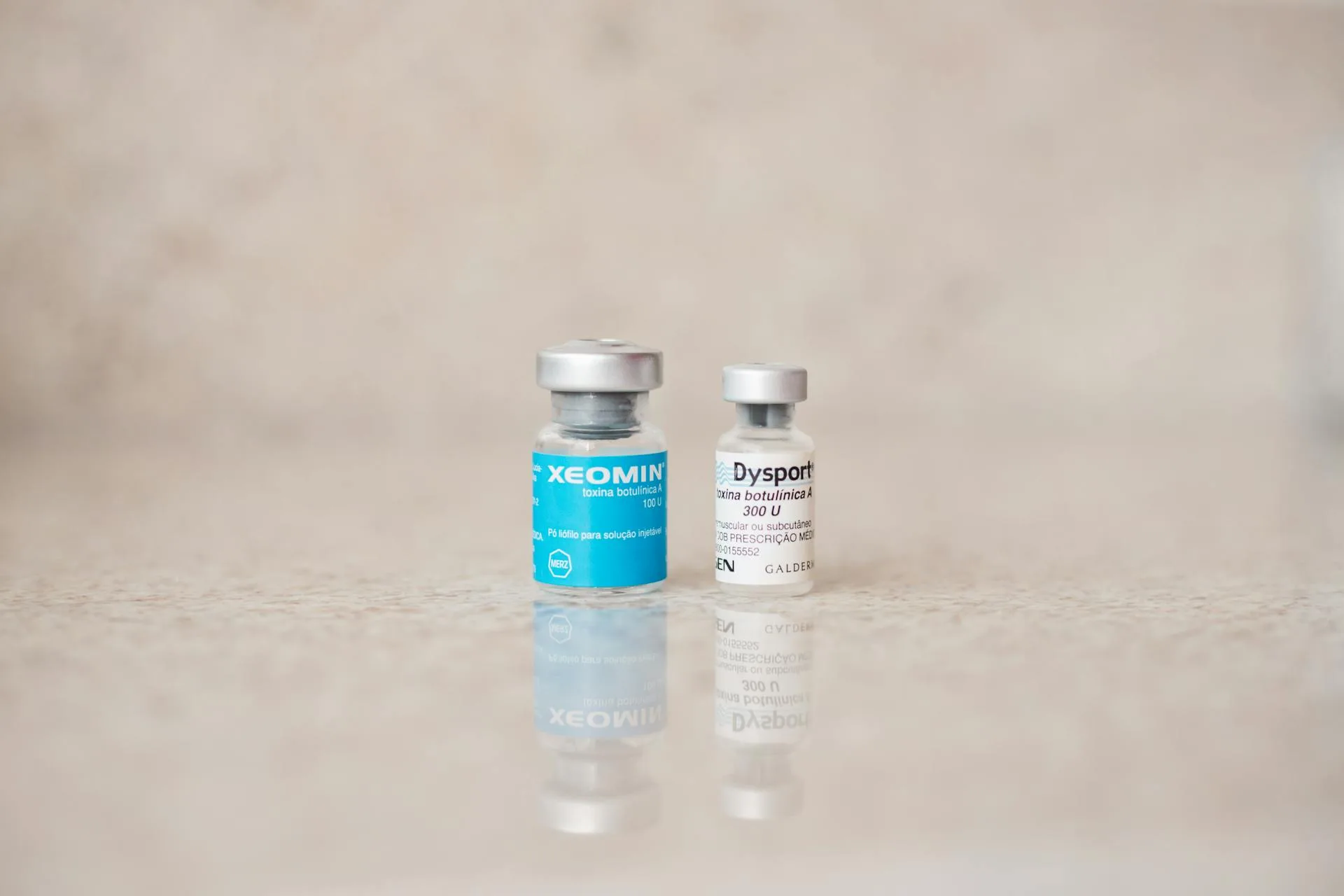
Other neurotoxins change the math. Dysport is dosed in its own units, which do not convert one-to-one with Botox units, and is not sold in 100-unit vials. Xeomin, Jeuveau, and Daxxify each have their own pricing and dosing. Build the cost per billable unit, and the cost per typical treatment, separately for each product you carry.
Provider Pay
Injector cost depends on the pay model. On an hourly model, a 30-minute appointment for an injector costing $60 an hour is $30 of labor, whether the patient gets 50 units or one. On a commission model, labor is a percentage of the price. This article uses 25 percent of the service price for its examples; your plan may differ. See our guide to injector compensation structures for how the common models compare.
Overhead: Per Unit or Per Visit
Rent, front desk staff, insurance, software, card fees, and marketing all have to be covered. The usual method divides monthly overhead by units sold. That works for averages but hides the problem with small treatments, because a 1-unit visit occupies a treatment slot just like a 50-unit visit does. A better method assigns overhead to the appointment slot.
Illustrative example
The model practice used in the rest of this article:
- Product: $6.00 per billable unit (a $540 vial yielding 90 billable units).
- Injector: 25 percent commission on the service price.
- Overhead assigned to neurotoxin: $15,000 a month, covering 200 thirty-minute appointments and 5,000 units. That is $75 per appointment slot, or $3.00 per unit at the average visit of 25 units.
At $12 a unit, the average 25-unit visit brings in $300. It costs $150 in product, $75 in commission, and $75 in overhead. Profit is zero.
The all-in cost of a unit is not fixed. It depends on your vial price, your yield, your pay model, and, most of all, how many units the average visit includes. In this model, the all-in cost at the average visit is $12 a unit, exactly the price many practices charge.
The Margin Leak: Why 1-Unit Treatments Are a Trap
A patient who comes in for a lip flip, a brow touch-up, or a single-unit correction uses the same appointment slot, the same front desk time, and the same room turnover as a patient getting a full-face treatment. The only thing that changes is how much product is used, and product is only one part of the cost.
Illustrative example
A 1-unit treatment at $12, using the model practice:
- Commission model: $12 of revenue, minus $6.00 product, $3.00 commission, and $75 of slot overhead. Loss: $72.
- Hourly model: $12 of revenue, minus $6.00 product, $30 of injector time, and $75 of slot overhead. Loss: $99.
A 10-unit treatment at $12: $120 of revenue, minus $60 product, $30 commission, and $75 of overhead. Loss: $45.
If you allocate overhead per unit instead of per slot, the 1-unit visit looks like it breaks even ($6 product, $3 commission, $3 overhead). That is exactly why per-unit allocation misleads owners about small treatments.
The problem is operational too. Every small touch-up occupies a slot that could have gone to a patient spending several hundred dollars. When the schedule fills with low-unit visits, revenue per provider hour falls and the cost per unit rises, because the same fixed costs are spread over fewer units.
The answer is not to refuse small treatments. It is to price them so they cover the slot. That is what a minimum treatment fee is for, and the pricing section below shows how to calculate one.
The 50-Unit Treatment: Where Real Margin Lives
A 50-unit treatment spreads the fixed cost of the appointment (room, front desk, consult, cleanup) over 50 billable units instead of one. That is where neurotoxin starts to earn money.
Illustrative example
A 50-unit treatment, using the model practice:
- At $12 a unit: $600 of revenue, minus $300 product, $150 commission, and $75 overhead. Profit: $75, or 12.5 percent.
- At $14 a unit: $700, minus $300 product, $175 commission, and $75 overhead. Profit: $150, or about 21 percent.
- At $16 a unit: $800, minus $300 product, $200 commission, and $75 overhead. Profit: $225, or about 28 percent.
For comparison, the average 25-unit visit at $14 earns $350 − $150 − $87.50 − $75 = $37.50, about 11 percent.
Note that on a commission plan, the injector's pay rises with the price, so the practice keeps only 75 cents of each extra dollar.
Average units per visit is the number to watch. In the model practice, the same $14 price earns about 21 percent on a 50-unit visit and about 11 percent on a 25-unit visit, and it loses money below about 18 units. A patient who comes in twice a year for 50 units is worth more than one who comes in five times for 10 units a visit, even though the annual units are the same, because every visit carries a fixed cost. Scheduling, consultation, and pricing should all encourage treatments that address the areas a patient actually wants treated in one visit rather than several small ones.
How to Calculate Your Actual Per-Unit Margin: The Four-Step Margin Review
This is the short version of the review. Our full per-unit margin model adds waste tracking, card fees, and commission structure.
Step one: product cost per billable unit. Divide what you pay per vial by the units you actually bill from it, not by 100. If you pay $540 and consistently bill 90 units, your product cost is $6.00 per unit.
Step two: labor per unit. On commission, multiply the commission rate by your price: 25 percent of $12 is $3.00. On an hourly model, divide the injector's loaded hourly cost by the units they inject in a typical booked hour.
Step three: overhead per appointment. Take the monthly overhead that neurotoxin appointments share (rent, front desk, insurance, software, card fees, marketing) and divide by the number of neurotoxin appointments. Then divide by your average units per visit to get the per-unit figure at your average visit.
Step four: subtract. Price minus product, labor, and overhead per unit is your per-unit margin at the average visit. Repeat for a small visit and a large visit to see the spread.
Illustrative example
In the model practice at $12: $6.00 product, $3.00 commission, and $3.00 overhead per unit at the 25-unit average visit. Margin: $0.00.
At $15: $6.00 product, $3.75 commission, and $3.00 overhead. Margin: $2.25 a unit, or $56.25 on the average visit. Across 5,000 units a month, that is $11,250 a month from the same patients.
Run the review quarterly. Vial prices change, volume changes, and yield changes as injectors gain or lose efficiency. A price that worked last year may not work now.
Competitive Pricing Strategy: Where to Set Your Price in 2026
Local prices tell you what patients are used to paying. They do not tell you what you need to charge. Set the price from your own numbers first, then decide how to position it against the market.
Setting the Per-Unit Price
The cost-based pricing formula divides the dollar costs of a service by one minus everything that scales with price (commission, and profit). For neurotoxin, the dollar costs are product (per unit) and overhead (per visit), so average visit size matters:
Price per unit = (product cost per unit × units per visit + overhead per visit) ÷ (units per visit × (1 − commission % − target margin %))
Illustrative example
Using the model practice ($6.00 product, $75 overhead per visit, 25 percent commission):
- Average visit of 25 units, 20 percent target margin: ($150 + $75) ÷ (25 × 0.55) = $225 ÷ 13.75 = $16.36 per unit.
- Average visit of 50 units, 20 percent target margin: ($300 + $75) ÷ (50 × 0.55) = $375 ÷ 27.5 = $13.64 per unit.
- Average visit of 25 units, 30 percent target margin: $225 ÷ (25 × 0.45) = $20.00 per unit.
The same target margin requires about $16 a unit in one practice and under $14 in another, and the only difference is average visit size. If you are below the price your formula produces, you need to be certain your cost structure supports it.
Setting a Minimum Treatment Fee
A minimum fee makes a small visit cover its slot. Treat the fee as the price of the visit and solve for it:
Minimum fee = (product cost for the small treatment + overhead for the slot) ÷ (1 − commission % − target margin %)
Illustrative example
For a 4-unit lip flip in the model practice, at a 20 percent target margin:
- Booked in a standard 30-minute slot: ($24 + $75) ÷ 0.55 = $180.
- Booked in a 15-minute touch-up slot, which carries half the slot overhead: ($24 + $37.50) ÷ 0.55 = $111.82.
The second line matters. If your market will not bear the minimum fee a full slot requires, shorten the slot. Many practices book small touch-ups in dedicated short appointments or pair them with another service in the same visit. Both lower the overhead each small treatment has to carry.
Memberships
Neurotoxin memberships turn one-time purchases into recurring revenue. Price them with the same math. A membership at $55 a month that accrues 4 units a month is $13.75 per unit ($660 a year for 48 units). Whether that works depends on how members use it.
Illustrative example
A member who comes in quarterly and uses only the 12 units accrued since the last visit brings in $165 for that visit. If commission is paid on that $165, the visit costs $72 in product, $41.25 in commission, and $75 in slot overhead. Loss: $23.25.
A membership with a small unit allocation works only if members typically add units at the visit, or if their visits are booked in shorter slots. Model your own members' actual visit size before launching or repricing a program. Our membership vs. package analysis covers the broader economics.
Pricing by Provider Type
Some practices charge more per unit for physician injectors than for nurse injectors, and patients generally understand the distinction. Price each tier from that provider's actual cost. The price difference is margin only to the extent the physician's pay per unit does not rise by the same amount.
Positioning Against Low-Price Competitors
Do not try to match the lowest price in your market until you know how that practice can afford it. It may be subsidizing neurotoxin with other services, operating at a volume you cannot match, or simply losing money. Compete on the things patients weigh alongside price: the injector's skill, the consultation, consistent results, and safety. Patients who stay for those reasons are more likely to stay through a price increase.
Conclusion: Stop Pricing Like a Commodity, Start Pricing Like a Clinic
The cost of a unit of Botox is not the vial price divided by 100. Once product yield, provider pay, and the overhead each appointment carries are included, the all-in cost at a typical visit can land right at the price many practices charge. Small visits cost far more per unit than large ones.
The path forward is straightforward. Calculate your cost per billable unit and your overhead per appointment. Set your per-unit price from your average visit size and your target margin. Set a minimum treatment fee, and book small treatments in slots sized for them. Price memberships from how members actually use them. Then run the four-step review every quarter.
If you already run a neurotoxin program and want to see why your current margin may be lower than you think, the full per-unit margin model walks through every line of the cost stack. To test your own numbers, use the Botox Profit Calculator. For related pricing articles, see the pricing and service mix library.
See this problem in your practice?
Ward Advisory can help work out how large the financial impact actually is and what's driving it.
Request a Strategy CallAbout the author
Tanner Ward
Founder of Ward Advisory. Tanner works with established med spas and aesthetic practices on where profit and cash are being lost and what to change, drawing on 10+ years of finance and operating experience.