The Med Spa Filler Pricing Strategy: How to Set Margins That Actually Hold (2026 Guide)
Stop guessing your filler margins. Learn the cost math, pricing models, and psychological tactics that build a med spa filler pricing strategy with real profit.
What this helps diagnose:Filler looks like a profit center, but you do not know what a syringe nets.

Dermal filler is the service that makes a med spa feel like a real business. A single syringe can command $700, $900, even $1,200 on the treatment sheet, and when you look at that number next to a $12-per-unit Botox injection, it is easy to believe filler is where the profit lives. That belief is dangerous. Filler is a high-ticket trap, a service category where the headline price creates a false sense of margin security while operational costs, retail purchasing habits, and competitive anchoring silently drain the bottom line. Most med spa owners do not know their true net margin per syringe, and many are selling filler at a loss without realizing it. This article is a math-first guide to building a med spa filler pricing strategy that produces margins that survive the P&L statement, not just the treatment room. We will walk through the real cost of goods, the minimum retail price for a 50 percent gross margin, the competitive positioning rules that protect your pricing power, and the psychological structure that keeps clients from negotiating. If your current pricing cannot survive this math, it is time to rebuild it from cost up.
Table of Contents
-
Three Pricing Models for Med Spa Filler (And When to Use Each)
-
Pricing for New Clients vs. Existing Clients (The Retention Gap)
-
When and How to Raise Your Filler Prices (Without Losing Clients)
Why Filler Is a High-Ticket Trap (The Thin-Margin Reality)
Walk into most med spas in the United States and you will find dermal filler priced between $700 and $1,000 per syringe. That number feels substantial. It suggests a service category that carries the practice, offsetting lower-margin facials or the operational drag of laser maintenance contracts. The problem is that the number on the menu is not the number that lands in the bank account, and the distance between those two figures is wider than most owners calculate.
The trap begins with how product is purchased. A syringe of Juvederm Voluma XC, one of the most commonly used fillers in the US market, can cost a practice anywhere from $250 to $400 depending on purchasing volume, manufacturer relationships, and whether the clinic is buying through a distributor or direct. A clinic buying retail, meaning small-quantity orders without tiered wholesale agreements, is paying at the high end of that range. At $400 cost and a $750 retail price, the gross profit looks like $350. That is a 47 percent gross margin before anything else touches the number. It feels acceptable. It is not.
Provider time, employer costs, payment processing, and overhead all reduce what is left after product cost. Use your actual compensation agreement and appointment duration rather than a presumed commission range. Salaried providers still have a cost per treatment.
Run the math on a $750 syringe with a $350 product cost, $150 injector commission, $25 in processing fees, and $75 in overhead allocation. Total cost: $600. Net margin: $150, or 20 percent. That is before accounting for no-shows, product waste, or the syringe you comp because a client was unhappy with a result that was technically perfect. The high ticket price masked a thin-margin reality, and if your product cost is closer to $400, that net margin shrinks to 13 percent. Many clinics are doing worse and do not know it because they have never run the per-syringe math with full cost allocation.
The second layer of the trap is competitive anchoring. Owners look at the med spa down the street charging $650 per syringe and assume they must match or beat that price to compete. That assumption rests on another assumption: that the competitor is profitable at $650. They probably are not, or they are cutting corners on product authenticity, injector training, or insurance coverage. Anchoring to an unprofitable competitor creates a race to a bottom where nobody wins, least of all the practice that is actually paying its bills. The American Med Spa Association recommends keeping prices within 20 percent of the local competitive norm, but that recommendation comes with a critical caveat: the norm must support your target margin. If the local norm is $650 and your cost math says you need $850 to be sustainably profitable, matching the norm is not competitive strategy. It is a slow liquidation.

The Real Cost Breakdown Per Syringe
To build a pricing strategy that holds, you need an honest accounting of what one syringe actually costs your practice. Here is the line-by-line breakdown that most clinics never formalize.
Start with the invoiced product cost for the exact product and quantity used. Include measured waste and supplies. Purchasing terms vary, so a generic per-syringe cost cannot establish whether a treatment is viable.
Calculate provider cost from the compensation agreement and treatment time, including consultation and follow-up. For illustration, 45 minutes at $65 per hour is $48.75 before employer taxes and benefits. Add those costs before assessing full contribution.
Use the actual processing and transaction fees in the practice's agreement. Apply them to collected revenue and include any per-transaction software charge.
Fixed overhead allocation is the line item most owners skip. Take your total monthly fixed costs: rent, utilities, liability and malpractice insurance, marketing spend, administrative salaries, cleaning services, and software subscriptions. Divide that sum by your average monthly treatment volume across all services. If your monthly overhead is $30,000 and you perform 400 treatments per month, your per-treatment overhead allocation is $75. Apply that to each syringe.
The full cost per treatment depends on these inputs. Compare it with the realized price and the contribution required to fund overhead before deciding whether a price is sustainable.
The 50% Gross Margin Rule: Your Minimum Retail Price Floor
Gross margin is the first filter every filler pricing decision must pass through. The formula is straightforward: subtract your cost of goods sold from the retail price, divide that number by the retail price, and multiply by 100. If you pay $300 for a syringe and sell it for $750, your gross margin is 60 percent. That is the number most owners quote when asked about their filler profitability. It is also incomplete.
A 50 percent gross margin is the minimum floor for a sustainable med spa, and even that assumes tight control over labor and overhead. If your COGS is $300 per syringe, a 50 percent gross margin requires a minimum retail price of $600. At $600, you have $300 in gross profit to cover injector pay, processing fees, and overhead allocation. If those costs total $250, your net margin is $50, or 8 percent. That is not enough to reinvest in the business, weather a slow month, or justify the liability of injecting a medical device into someone's face.
A common rule of thumb is to price filler at 2.5 to 3 times product cost, but a multiple of product cost does not guarantee any particular net margin, because labor and overhead are not proportional to product cost. If your COGS is $250, the rule points to a retail price between $625 and $750. At $750, with $250 COGS, $150 in labor, and $75 in overhead, the net margin is $275, or roughly 37 percent. That is a healthy, defensible number. The owner who thought they were making 66 percent because they only looked at COGS has now seen the real picture, and it is still good, but it is not what they told their accountant.
The takeaway is not that filler is a bad business. It is that filler pricing must be built on a total-cost-plus model, not a COGS-plus model. Every expense category gets layered in before the price is set. If the resulting number is higher than the local market appears to support, the answer is not to lower the price. The answer is to build the brand value, provider credentialing, and client experience that justify it.

How to Calculate Your Target Price Per Syringe
The target price is the number you must charge to cover every cost and hit your target net margin. (The true break-even price, at zero margin, is simply your total cost per syringe.) Here is the step-by-step calculation.
First, sum all variable costs per syringe: product cost, injector commission or allocated hourly wage, and disposable supplies like needles, cannulas, gauze, and gloves. For a typical syringe, this might total $450.
Second, add your per-service overhead allocation. If your total monthly fixed overhead is $30,000 and you average 400 treatments per month, add $75. Your total cost per syringe is now $525.
Third, divide that total cost by one minus your desired net margin percentage. If you want a 50 percent net margin, divide $525 by 0.5. Your target retail price is $1,050. If you want a 40 percent net margin, divide by 0.6, giving you $875. If you want 30 percent, divide by 0.7, giving you $750.
This formula removes guesswork. It tells you exactly what you must charge to build the business you want, and it gives you a clear metric to evaluate whether your local market can support that price. If the market cannot, you have two levers: reduce costs through better purchasing agreements or increase perceived value through branding and provider positioning.
Three Pricing Models for Med Spa Filler (And When to Use Each)
There are three foundational approaches to setting filler prices, and most successful practices use elements of all three. The key is knowing which model to lead with based on your clinic's stage, market, and brand positioning.
Cost-based pricing is the safest starting point, particularly for new clinics that lack market data or an established client base. You calculate your total cost per syringe, add your target margin, and set the price accordingly. The advantage is that you know, with mathematical certainty, that every syringe sold contributes to practice profitability. The risk is that your cost-based price may land above or below what your local market expects. If it lands below, you are leaving money on the table. If it lands above, you need to build a value narrative that supports the premium.
Competitor-based pricing is the most common approach in established markets. You secret-shop three to five local competitors, document their filler pricing by brand and syringe volume, and position yourself relative to that average. A common rule of thumb applies here: keep your price within about 20 percent of the local competitive norm unless you have a clear differentiator. If the local average for a syringe of Juvederm is $750, your range is $600 to $900. Below $600 signals discounting and will attract price-sensitive clients who are unlikely to become loyal, high-value patients. Above $900 requires justification: a board-certified dermatologist injector, a luxury clinical environment, a proprietary technique, or a safety record that competitors cannot match. The risk of competitor-based pricing is assuming the competitors are profitable. Many are not. Secret shopping tells you what they charge, not whether they are making money.
Value-based pricing is the model that supports $1,000-plus per syringe pricing. It rests on perceived outcomes, provider authority, and brand prestige rather than cost or competitive benchmarks. A client will pay $1,200 for a syringe of filler when they believe the injector's skill reduces risk, improves aesthetic outcome, and makes the experience worth the premium. This model requires strong front-desk credentialing: the ability to communicate the injector's training, experience, and results before the price is ever stated. It also requires a physical environment, website, and social media presence that consistently signal premium positioning. Value-based pricing is not something you declare. It is something you earn through years of consistent delivery and deliberate brand building.
The "20% Competitive Norm" Rule Explained
Compare like-for-like local services, including product, treatment scope, provider qualifications, and follow-up. Use that context alongside your full cost model and observed patient demand. A fixed percentage band around competitors is not evidence that a price is sustainable.
Psychological Pricing Tactics That Protect Your Margins
Pricing is not just math. It is psychology, and the way you present your prices on your website, in your consult rooms, and during treatment conversations has as much impact on conversion as the number itself. Several tactics, drawn from behavioral economics and adapted for medical aesthetics, can protect your margins without requiring a single dollar of discounting.
Anchoring is the practice of presenting a higher-priced option first so that the option you want to sell feels reasonable by comparison. On your treatment menu, list a premium package first: "Full Face Correction: $1,500" or "Complete Facial Rejuvenation: $2,200." When the client then sees a single syringe at $750, it feels like a measured, accessible choice rather than an expensive one. The anchor reframes the entire conversation.
Tiered pricing captures different budget segments without discounting your core offering. Structure your filler services into three tiers: Essential, Enhanced, and Premium. The Essential tier might use a specific product at a specific volume for a specific area. The Enhanced tier adds volume or combines products. The Premium tier includes a board-certified injector, a cannula technique, or a complementary follow-up. Each tier has a distinct price, and clients self-select based on their budget and goals. You have not lowered your price. You have created options.
The decoy effect is a specific application of tiered pricing where the middle option is priced to make the top option look like better value. If your Essential tier is $650 for one area and your Premium tier is $1,100 for full correction with a senior injector, price your Enhanced tier at $950. The Enhanced tier exists primarily to make the Premium tier look like the obvious choice for anyone who can afford it. Most clients will choose Premium, and those who cannot will choose Essential. The Enhanced tier is the decoy.
One critical warning: do not break filler pricing down to a per-milliliter or per-unit rate on your public price list. Botox is sold by the unit, and that model works because it allows clients to control their spend precisely. Filler is sold by the syringe, and attempting to create a per-mL price invites line-by-line comparison shopping that erodes your ability to price based on outcome and provider skill. A syringe is the unit. Keep it that way.
Pricing for New Clients vs. Existing Clients (The Retention Gap)
Most med spas make a critical error in their filler pricing strategy: they discount for new clients and charge full price to existing ones. This trains the market to wait for acquisition offers and punishes the clients who already trust you. A more sustainable approach separates the new client experience from the pricing structure and builds loyalty into the existing client journey.
For new clients, the goal is to reduce the barrier to entry without devaluing the service. The most effective tool is a first-time filler consultation fee, typically $100 to $200, that is fully credited toward treatment if the client books within a defined window. This does two things. It pre-qualifies serious buyers, because someone unwilling to pay a consult fee is unlikely to become a profitable filler client. And it protects your per-syringe price, because the treatment itself is not discounted. The client pays your standard rate and feels they received value through the credited consult, not through a cheaper syringe.
For existing clients, the strategy shifts to increasing average order value and purchase frequency without lowering the per-syringe price. A loyalty syringe program is one effective model: after a client purchases four syringes at full price, the fifth is offered at 50 percent off. This rewards cumulative spend, encourages clients to return to you rather than shop around, and preserves the integrity of your standard pricing. The discount is earned through loyalty, not given away at the first interaction.
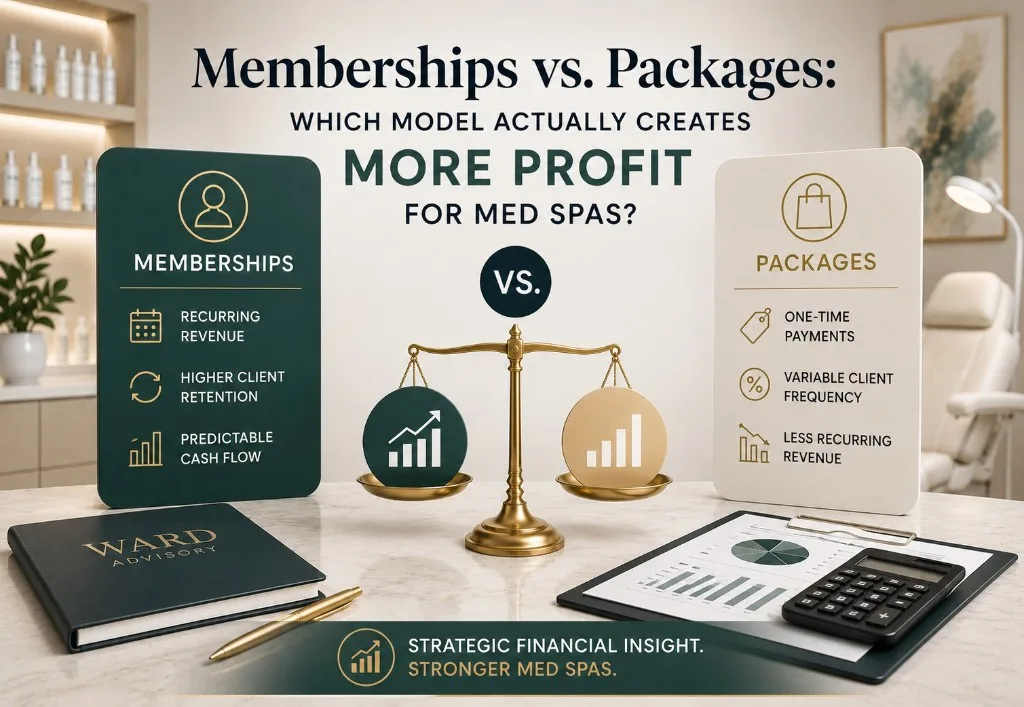
The membership model represents a significant gap in how most med spas approach filler pricing. A monthly membership program, priced between $99 and $199 per month, can include one syringe of filler per year plus a discount on additional syringes, typically 10 to 20 percent. This creates recurring revenue that smooths out the feast-or-famine cycles common in aesthetic practices. It also locks in volume commitments that improve your purchasing power with manufacturers. A client paying $149 per month generates $1,788 in annual revenue before booking anything else. Against that, subtract the included syringe's product cost (say $300), the injector pay on that treatment (say $150), and card processing (about $54 at 3 percent). The membership contributes roughly $1,280 a year toward overhead and profit before any additional purchases, and each add-on syringe at the member discount carries a thinner margin than a full-price one. Modeled this way, the math can work, and it builds a more predictable business.
The warning is simple: never offer a new-client-only filler discount. It trains your market to wait for a deal, it devalues your injector's skill, and it creates a two-tier pricing structure that existing clients will eventually discover and resent. Acquisition strategy should focus on reducing friction and building trust, not on lowering the price.
When and How to Raise Your Filler Prices (Without Losing Clients)
Prices must rise over time. Product costs increase, injector salaries grow, rent escalates, and the value of your practice's accumulated experience and reputation should be reflected in what you charge. The question is not whether to raise prices but when and how to do it without triggering client attrition.
The trigger events that justify a price increase are specific and communicable. A new product line introduction, such as adding the latest generation of Juvederm or Restylane, provides a natural moment to reset pricing. An injector completing advanced certification, such as a cannula technique course or a fellowship in aesthetic medicine, upgrades the value of every syringe they touch. A clinic renovation or relocation to a higher-quality space changes the client experience in a visible way. Even an annual cost-of-living adjustment, communicated transparently as reflecting broader economic conditions, is defensible if it is modest and predictable. Never raise prices without a reason you can state clearly to a client who asks.
The 10 percent rule is a practical guideline for the magnitude of any single increase. Raising prices by more than 10 percent at once triggers sticker shock, prompts clients to secret-shop competitors, and creates a perception of opportunism. If you need to move from $750 to $900 per syringe, do it in two steps over 12 to 18 months, each tied to a specific value upgrade.
Grandfathering existing clients preserves loyalty during a price transition. When you raise your standard price, give current clients a 60 to 90 day grace period during which they can book at the old rate. Communicate the change directly: an email explaining the price adjustment, the reason behind it, and the window during which they can lock in the current rate. This approach reduces churn, generates a short-term booking surge, and makes clients feel valued rather than exploited.
The communication sequence matters. Train your front desk team to mention the injector's advanced training, the product's safety profile, and the clinic's follow-up care protocol before stating the price. When a prospective client hears the value narrative first, the price becomes the logical conclusion of that narrative rather than a number to negotiate. If the first thing a client hears is the price, everything that follows sounds like justification.
Introducing a premium tier before raising the standard price is a low-risk way to test the market's willingness to pay more. Launch a "Signature Filler" option using a specific product and technique, such as Voluma XC with a cannula, priced 15 to 20 percent above your current standard. If the premium tier books well, you have evidence that your client base will support a broader price increase. If it does not, you have learned something about your market's price sensitivity without damaging your core revenue.
The Margin Check: 5 Questions to Ask Today
Most med spa owners do not know their true filler margins. They know what they charge and what the product costs, and they assume the difference is profit. That assumption is the single largest source of profit leakage in aesthetic practices. Here are five questions that will tell you whether your pricing strategy is sound or whether your margins are quietly bleeding out.
First, what is your actual net margin per syringe after all costs? Not just COGS, but injector commission or allocated wage, merchant processing fees, disposable supplies, and a realistic allocation of your fixed overhead. If you cannot answer this question with a specific percentage, you are pricing blind.
Second, are you pricing within 20 percent of your local competitive norm, and is that norm profitable? Secret-shop your market, calculate the average, and then run the cost math on that average. If the local norm does not support a healthy margin, pricing within the band is not safe. It is a trap you need to price your way out of through value differentiation.
Third, do you have a tiered pricing structure, or are you leaving money on the table with a one-price-fits-all model? A single price for filler means you are underserving clients who would pay more for a premium experience and losing clients who need a lower entry point to begin their aesthetic journey.
Fourth, are you using psychological anchoring on your price page and in your consult rooms? If your menu lists a single syringe price without a higher-priced option to anchor against, you are making your price feel more expensive than it needs to.
Fifth, have you modeled a membership or loyalty program to stabilize recurring revenue? Practices that rely entirely on transactional filler sales are vulnerable to seasonality, economic downturns, and competitor discounting. Recurring revenue models change the financial structure of the business.
If you answered "I don't know" to even one of these questions, your margins are likely leaking. The fix starts with an honest assessment of what each syringe actually nets. For the general method behind that math, see how to price med spa services.
Frequently Asked Questions About Med Spa Filler Pricing
What is the profit margin on dermal fillers? It depends entirely on your product cost, price, and labor model. In the illustrative example above, a $750 syringe carries a 67 percent margin on product cost alone and about 37 percent after labor and overhead. Practices that do not track net margin per syringe often find it is much lower than they assumed.
How much should I charge per syringe of filler in 2026? Published fee data is thin and mostly reflects plastic surgery practices rather than med spas, and local prices vary widely. Your floor should be set by your cost math, not by a market average. Calculate your total cost per syringe, add your target net margin, and use that number as your baseline. If the market average is lower, you need a value differentiation strategy, not a price match.
Can I charge more for a physician injector than a nurse injector? Yes, but the premium must be communicated clearly. Many clients will pay more for a board-certified dermatologist or plastic surgeon, particularly for higher-risk areas like the tear troughs or lips. The front desk must be trained to explain the credential difference without disparaging other providers.
Should I offer filler financing? It is worth considering. Patient financing options such as CareCredit or Affirm can reduce price objections without lowering your price. The client pays your full price and the financing company handles the installments; just count the merchant fee you pay the financing company as part of your cost per syringe.
If your filler pricing cannot survive an honest cost audit, the solution is not to cut prices further. It is to build the pricing strategy, brand value, and operational discipline that make your margins hold. More on this is in the pricing, service mix, and patient economics section of the library.
See this problem in your practice?
Ward Advisory can help work out how large the financial impact actually is and what's driving it.
Request a Strategy CallAbout the author
Tanner Ward
Founder of Ward Advisory. Tanner works with established med spas and aesthetic practices on where profit and cash are being lost and what to change, drawing on 10+ years of finance and operating experience.